
Best Luxury Bathrooms UK Homeowners Choose
Wednesday, July 8, 2026
By Holly Colson

The best luxury bathrooms UK homeowners invest in rarely come down to one expensive tap or a statement bath. What sets them apart is how well every detail works together - layout, lighting, materials, storage and installation quality all need to feel considered from the start.
For homeowners upgrading a principal en suite, redesigning a family bathroom or planning a refined guest space, luxury is not simply about spending more. It is about creating a room that feels calm, beautifully finished and easy to live with every day. That means balancing visual impact with practical decisions, especially in homes where quality, longevity and property value all matter.
What defines the best luxury bathrooms UK homeowners want?
A genuinely luxurious bathroom feels tailored to the house and the people using it. In a period property, that may mean a softer palette, classic brassware and furniture with a more furniture-led appearance. In a newer home, it could be cleaner lines, large-format porcelain and discreet built-in storage.
The common thread is thoughtful design. Good proportions matter. So does ease of movement, especially around baths, vanity units and walk-in showers. A luxury bathroom should feel generous, but not wasteful. Even in a compact room, the right arrangement can create that sense of space.
There is also a difference between showroom style and lived-in quality. A bathroom might look impressive in a photograph, yet disappoint in daily use if storage is poor, lighting is harsh or heating is an afterthought. The best results come from asking how the room will function at 6.30 on a weekday morning as well as how it will look on completion.
Start with layout, not products
One of the most common mistakes in premium bathroom renovations is choosing products too early. It is understandable - baths, tiles and brassware are the visible elements people naturally gravitate towards. But layout should come first.
The position of the shower, WC, basin and storage has a direct effect on comfort and appearance. A well-planned layout improves sightlines as you enter the room, gives each feature enough breathing space and avoids awkward pinch points. It can also make a mid-sized room feel more luxurious than a larger bathroom with a poor arrangement.
In family homes, practical zoning often makes the difference. A double vanity may be worth prioritising over a freestanding bath if two people need the room at once. In an en suite, a generous walk-in shower with recessed storage can deliver more everyday value than trying to fit too many features into the footprint.
For listed homes or rooms with sloping ceilings and irregular walls, bespoke planning becomes even more important. Off-the-shelf assumptions rarely work in older properties, and the most elegant solutions are often the least obvious.
Materials that earn their place
Luxury is closely tied to finish quality, but that does not always mean the most expensive material in every position. It means choosing surfaces that look exceptional and perform well over time.
Porcelain remains a strong choice for many high-end bathrooms because it offers durability, consistent finish and excellent design flexibility. It can replicate natural stone beautifully, while being easier to maintain. Natural stone has its own appeal, particularly where warmth, variation and character are important, but it does require more care and may not be right for every household.
Brassware deserves careful attention because it is handled every day. Weight, finish and engineering matter. A brushed brass tap can look superb, but only if the wider scheme supports it and the product quality is there. The same goes for matt black, polished nickel or chrome. Trends come and go, but the finish should still feel right in ten years.
Furniture is another area where luxury becomes obvious very quickly. Bespoke or handmade pieces can transform a room because they solve practical issues while giving the bathroom a more considered, residential feel. That is particularly valuable where standard units leave wasted gaps or fail to suit the character of the home.
Lighting is where luxury often succeeds or fails
Poor lighting can flatten even the most expensive bathroom. Good lighting adds depth, softness and function.
In the best luxury bathrooms UK designers often layer several types of light rather than rely on one central fitting. Task lighting around mirrors helps with shaving and make-up. Ambient lighting creates a calmer overall mood. Accent lighting, used carefully, can draw attention to textured tiles, alcoves or a freestanding bath.
It is also worth thinking about how the room will feel at different times of day. Bright, clinical light may be useful in the morning, but it does not create a restful atmosphere in the evening. Dimmable options and warmer colour temperatures often make a noticeable difference.
Natural light should be used well too. Privacy glass, carefully chosen window treatments and considered mirror placement can all help the room feel brighter without making it feel exposed.
Storage should be elegant, not obvious
A luxury bathroom is difficult to maintain if everyday items have nowhere to go. Bottles on ledges and overflowing baskets quickly undermine the look, no matter how premium the finishes may be.
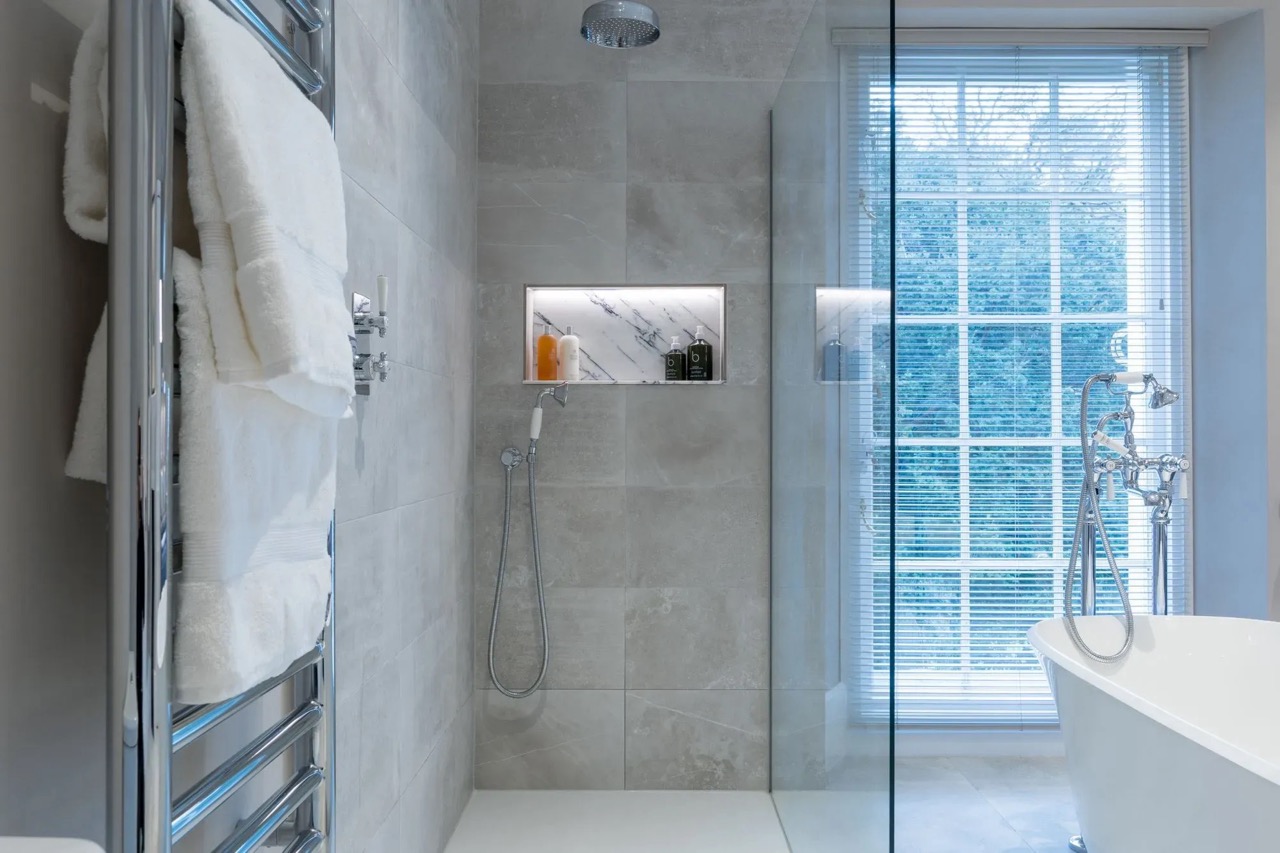
The answer is not always more cabinetry. It is better storage in the right places. Vanity drawers with sensible internal organisation, mirrored cabinets that do not dominate the room, recessed shower niches and fitted tall units can all keep surfaces clear without making the space feel heavy.
This is where tailored design shows its value. Different households need different solutions. A principal en suite may need discreet storage for daily essentials. A family bathroom usually needs harder-working storage for children, towels and cleaning products. Guest bathrooms can be simpler, but still benefit from thoughtful provision.
Comfort features that genuinely improve daily life
Some premium features are purely aesthetic. Others change the way the room feels to use. Underfloor heating is one of the clearest examples. It improves comfort, frees wall space and can help create a cleaner visual finish than relying solely on a larger radiator.
Ventilation matters just as much, although it is less glamorous. In a well-insulated home, moisture control is essential for preserving finishes and preventing longer-term issues. Quiet, effective extraction should be part of the plan from the beginning, not squeezed in later.
Shower performance is another area where quality becomes very obvious. Water pressure, valve choice, drainage and enclosure design all need to work together. A spacious walk-in shower with poor flow or slow drainage never feels luxurious.
If space allows, a bath should feel intentional rather than tokenistic. Freestanding models can look striking, but they need the right setting. In some rooms, a beautifully detailed built-in bath offers a smarter result and better use of space.
Why installation quality matters as much as design
Luxury bathrooms are unforgiving. The finer the materials and cleaner the design, the easier it is to spot poor workmanship. Uneven tile lines, careless silicone work, badly aligned brassware or unresolved corners can spoil the whole room.
That is why product choice alone is not enough. The standard of installation, project management and finishing detail has a major effect on the final result. Skilled trades, accurate preparation and a clear process matter just as much as the specification.
For homeowners in areas such as Guildford, Farnham and the Surrey Hills, where homes often carry both character and value, this is especially relevant. Period features, non-standard room shapes and premium expectations leave little room for shortcuts. Working with a specialist who can manage design, supply and installation as one joined-up service usually leads to a calmer experience and a better outcome.
Jeremy Colson Bathrooms has built its reputation on that kind of complete, carefully managed approach, which is often what discerning homeowners are really looking for when they begin a renovation.
Best luxury bathrooms UK trends worth considering - and which to question
Some current trends have real staying power. Textured neutrals, warmer metallic finishes, natural-look surfaces and more furniture-led bathroom design all continue to work well because they bring softness and permanence.
Walk-in showers remain popular, and for good reason. They offer accessibility, visual simplicity and a sense of space. Fluted glass is also being used more often, giving privacy without making the room feel closed off.
Other choices depend more on context. Very dark schemes can look dramatic, but they need strong lighting and enough space to avoid feeling oppressive. Bold statement stone can be beautiful, yet if every surface competes for attention, the room may date more quickly. The same applies to highly trend-led colours. They can work brilliantly in the right home, but they need conviction and careful balance.
The safest route is not to avoid personality. It is to build personality on a timeless foundation. A calm palette, quality furniture and well-chosen fittings will generally last longer than a design driven entirely by fashion.
How to judge whether a bathroom will still feel luxurious in ten years
A useful test is to strip the room back mentally and ask what is carrying the scheme. If the answer is only one fashionable finish or one striking product, the design may not wear well. If the room still sounds appealing when reduced to proportion, material quality, lighting and craftsmanship, it is usually on firmer ground.
Long-term luxury is often quiet. It shows in drawers that close properly, tiles that still look crisp, lighting that flatters the space and storage that keeps the room calm. It is there in the ease of cleaning, the comfort underfoot and the feeling that nothing was chosen in haste.
That is what makes a bathroom feel genuinely premium rather than merely expensive. If you are planning your own project, start by asking how you want the room to function, then build the design around that. The most successful bathrooms do not just impress on day one - they continue to feel right every morning after.

.webp)